
Comprehensive Guide to Property Registration Businesses in Sialkot, Pakistan

Why Property Registration Matters in Sialkot, Pakistan Property registration is an essential legal procedure that protects property owners and investors. In Sialkot, a thriving business hub in Pakistan, the importance of property registration businesses has increased significantly. It is crucial to understand how property registration plays a vital role in the real estate sector and its impact on the local economy. What Is Property Registration? Property registration refers to the formal process of recording the ownership of property with the relevant government authorities. In Pakistan, it ensures that the buyer’s ownership is legally recognized, preventing disputes over property rights. Property registration businesses provide essential services that facilitate this process. Key Reasons for Property Registration Legal ProtectionWhen property is registered, it serves as a legal proof of ownership. It protects the buyer from disputes or claims from previous owners or third parties. Prevent FraudRegistration ensures that the property title is free from encumbrances. Property registration businesses in Sialkot help verify the authenticity of property documents, protecting both buyers and sellers. Financial TransactionsBanks and financial institutions require property to be registered for offering loans or mortgages. This makes registration an essential step for anyone wishing to use their property as collateral. Investment SecurityRegistered properties increase their market value, making them a safer investment for individuals and businesses in Sialkot. The Role of Property Registration Businesses Property registration businesses provide a comprehensive range of services, including: Legal Advice: Guidance on the legal aspects of property transactions. Documentation Assistance: Ensuring all necessary documents are correctly completed. Liaison with Government Authorities: Facilitating communication between clients and authorities like the Punjab Land Records Authority (PLRA). By hiring a property registration service, clients avoid the complexities of government bureaucracy and legal hurdles, ensuring a smooth and secure transaction. Key Features of Property Registration Documenting OwnershipRegistered property gives the owner legal proof of their stake in the property. The property registration process officially records the transfer of ownership, ensuring that there are no discrepancies in the property’s title. Legal SecurityRegistered properties are protected by law, preventing unauthorized transactions and claims on the property. Registration safeguards against property fraud, a major concern in real estate transactions. Accessible Public RecordsProperty registration businesses in Sialkot ensure that the property’s ownership records are available to the public for verification. This transparency reduces fraud and ensures the credibility of property transactions. Formal RecognitionOnce a property is registered, it is formally recognized by the government. This helps in future transactions, such as securing loans, selling property, or inheriting it. The Property Registration Process in Pakistan The process of registering property in Pakistan can be complex, requiring careful attention to detail. Property registration businesses in Sialkot help streamline the process by: Verifying Legal Documents: Ensuring that all necessary paperwork, such as the sale deed and identification documents, are in order. Government Liaison: Acting as intermediaries between clients and local authorities, like the Punjab Land Records Authority (PLRA), to ensure smooth and timely registration. Fee Management: Calculating and managing all registration fees, stamp duties, and other legal charges to avoid any surprises during the process. By understanding the importance of property registration, property owners and investors can secure their property rights and avoid potential legal complications in the future. Step-by-Step Property Registration Process in Pakistan The property registration process in Pakistan involves several essential steps to ensure that ownership is legally recognized. For property registration businesses in Sialkot, providing expert services in each of these stages is crucial for a smooth transaction. Here’s a breakdown of the typical workflow involved in property registration. Step 1: Verification of Documents Before proceeding with the registration, it’s essential to verify the legal status of the property. This involves checking the title deed, property documents, and the ownership history. A property registration business in Sialkot helps clients confirm that the property is free of any legal disputes. Title Deed: The property’s title deed should be authentic and free from encumbrances. Previous Ownership Records: The history of the property should be reviewed to ensure the seller has the legal right to transfer ownership. Step 2: Drafting the Sale Deed (Bay-Nama) The sale deed, or Bay-Nama, is a legal document that outlines the terms of the transaction. This document includes details such as the property description, the sale price, and the terms of transfer. A property registration business in Sialkot helps in drafting and reviewing the sale deed to ensure it complies with legal requirements. Details Included in Bay-Nama: Full names and details of the buyer and seller. Property details (location, size, etc.). Agreed sale price and payment terms. Step 3: Payment of Stamp Duty and Fees In Pakistan, registering property involves paying stamp duty, Capital Value Tax (CVT), and other registration fees. The property registration business will calculate these amounts and assist with payments to avoid delays in the registration process. Stamp Duty: A tax levied on the sale deed, typically based on the property’s value. Capital Value Tax (CVT): A tax on the transfer of property, usually around 2% of the market value. Step 4: Submission to Sub-Registrar and Biometric Verification After preparing the necessary documents and paying the fees, the next step is submitting the sale deed to the local sub-registrar. This involves biometric verification of the buyer and seller to prevent fraud. Biometric Authentication: Both parties must undergo biometric verification by the National Database and Registration Authority (NADRA). Step 5: Mutation of Property Once the sale deed is registered, the final step is the mutation of the property in land revenue records. This process updates the ownership in the government’s land records and ensures that the buyer’s name is officially listed as the new owner. Mutation Process: This involves updating the land revenue records at the local revenue office. This is a critical step that finalizes the transfer of ownership. The Role of Property Registration Businesses in Sialkot Property registration businesses assist in managing all these steps, ensuring that each stage is completed correctly and in a timely manner. By handling everything from document verification to mutation,
Top 5 Benefits of Hiring Chartered Accountants for Audit Services
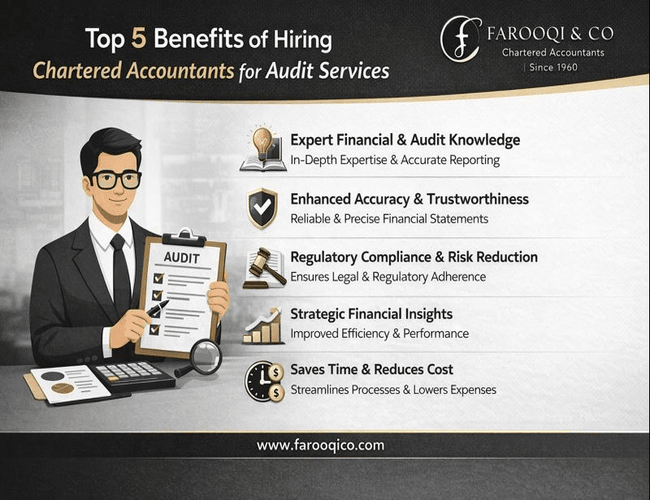
Why Audit Services Matter for Businesses in Sialkot Understanding the Business Landscape of Sialkot Sialkot is one of Pakistan’s most active industrial and export-driven cities. From sports goods and surgical instruments to leather and manufacturing units, businesses here operate in highly regulated and competitive environments. In such conditions, professional Audit services are not just a legal requirement but a strategic necessity. Companies that rely on qualified Chartered accountants gain clarity, control, and credibility in their financial operations. The Growing Need for Professional Audits With increasing scrutiny from regulatory authorities and stakeholders, businesses must maintain transparent financial records. Proper audits support long-term sustainability by ensuring accurate reporting, strong internal controls, and adherence to Tax compliance standards. When audits are conducted by experienced Chartered accountants, businesses also gain access to valuable insights related to accounting services, Tax consultancy, and financial advisory. Audit Services vs Basic Accounting Comparison: Audit Services vs Routine Accounting Audit services focus on verification, risk assessment, and compliance Accounting services focus on recording daily financial transactions Audits are independent and objective Accounting is internal and operational This comparison highlights why audits add a higher level of assurance and trust for business owners, investors, and regulators. How Audit Services Support Business Growth Businesses that invest in professional audits often experience: Improved financial accuracy and reporting Stronger compliance with local and federal laws Better readiness for corporate advisory and Business consulting decisions Enhanced support for CFO services and strategic planning In Sialkot’s competitive market, audit services act as a foundation for reliable Bookkeeping services, effective Tax consultancy, and informed Financial advisory decisions. Hiring Chartered accountants ensures your business remains compliant, credible, and prepared for growth. What Are Audit Services and Why Are They Essential? Defining Audit Services in a Modern Business Environment Audit services involve an independent and systematic examination of financial records to ensure accuracy, transparency, and compliance with applicable laws. These services are typically performed by qualified Chartered accountants who assess whether financial statements fairly represent a company’s financial position. For businesses in Sialkot, audits are essential due to export regulations, tax laws, and increasing demands from banks and investors. Unlike routine accounting services or Bookkeeping services, audit services go deeper. They evaluate internal controls, identify financial risks, and confirm whether records comply with Tax compliance requirements and corporate regulations in Pakistan. Types of Audit Services Businesses Commonly Need Common Audit Categories Statutory audits required by law Internal audits for process improvement Tax audits linked with Tax consultancy Special audits for investors or lenders Each type plays a role in strengthening governance and supporting long-term stability. Audit Services vs Bookkeeping Services Comparison: Audit Services vs Bookkeeping Services Audit services verify and evaluate financial data Bookkeeping services record daily transactions Audits are periodic and independent Bookkeeping is continuous and internal This comparison shows why audits provide assurance beyond basic record-keeping. Why Audit Services Are Essential for Business Success Professional audits contribute directly to better decision-making and risk management. Businesses supported by financial advisory, corporate advisory, and Business consulting benefit more when audits provide reliable financial foundations. Audit findings also support advanced CFO services, helping management plan growth, control costs, and maintain credibility. In today’s regulatory environment, audit services are not optional. They are a critical tool that connects Chartered accountants, Tax consultancy, and strategic financial management into one reliable framework for sustainable business operations. Who Are Chartered Accountants and What Makes Them Different? Understanding the Role of Chartered Accountants Chartered accountants are highly qualified financial professionals trained to manage, review, and verify complex financial matters. In Pakistan, they are certified by ICAP and are legally authorized to provide Audit services, Tax consultancy, corporate advisory, and Financial advisory services. Their rigorous education and ethical standards distinguish them from general accountants and bookkeepers. For businesses in Sialkot, working with Chartered accountants means gaining access to professionals who understand both local regulations and international financial standards. Their expertise ensures that accounting services and Bookkeeping services align with legal and regulatory requirements. Professional Training and Regulatory Oversight What Sets Chartered Accountants Apart Extensive professional exams and practical training Strict ethical and compliance standards Continuous professional development Accountability to regulatory authorities These factors ensure accuracy, independence, and reliability in every audit engagement. Chartered Accountants vs Non-Qualified Accountants Comparison: Chartered Accountants vs General Accountants Chartered accountants are licensed to perform audits General accountants focus on routine accounting tasks Chartered accountants provide corporate advisory and Business consulting General accountants have limited advisory authority This comparison highlights why audit services must always be handled by qualified professionals. Value Beyond Audit Services In addition to audit services, Chartered accountants offer integrated solutions that include Tax compliance, CFO services, and strategic financial advisory. Their ability to analyze financial data helps businesses reduce risks, improve profitability, and make informed decisions. By combining audits with Tax consultancy and Business consulting, chartered accountants become long-term partners in sustainable business growth rather than just compliance providers. Benefit #1 Strong Compliance with Pakistani Laws and Regulations Why Regulatory Compliance Is Critical for Businesses Operating a business in Pakistan requires strict adherence to multiple legal and financial regulations. From SECP requirements to FBR rules, non compliance can lead to penalties, audits, and reputational damage. Hiring experienced Chartered accountants for professional Audit services ensures that businesses in Sialkot remain fully compliant with all applicable laws. Qualified auditors understand the latest changes in tax laws, corporate regulations, and reporting standards. Their involvement helps businesses meet Tax compliance obligations while aligning financial practices with national and international requirements. Key Laws Covered Through Professional Audit Services Areas Where Compliance Matters Most Companies Act and SECP regulations Income tax and sales tax requirements Export documentation and reporting Corporate governance standards Through integrated accounting services and Bookkeeping services, chartered accountants ensure that financial records are accurate and audit-ready at all times. Chartered Accountants vs In House Compliance Handling Comparison: Professional Audit Services vs Internal Handling Chartered accountants ensure independent verification Internal teams may lack regulatory updates Audit services reduce risk of non compliance Internal handling increases exposure to penalties This comparison
How to Choose the Best Audit Firm in Sialkot for Your Business

Introduction: Running a business in Sialkot comes with a range of financial responsibilities, and ensuring accurate reporting is critical for success. Choosing the right audit firm can save time, prevent errors, and enhance your company’s credibility. With the growing business landscape in Sialkot, the demand for professional audit services Sialkot is higher than ever. An audit is not just about compliance; it helps business owners identify financial gaps, optimize processes, and make informed decisions. For many entrepreneurs, selecting the best audit firm in Sialkot can feel overwhelming, especially with multiple service providers available. Why Audit Services Matter Provides accurate financial reporting Ensures compliance with legal and tax regulations Helps detect fraud and operational inefficiencies Builds credibility with investors and stakeholders Sialkot Business Landscape Sialkot is a hub for industries like sports goods, surgical instruments, and leather products. Each sector has unique financial requirements, making it essential to hire Chartered accountants Sialkot who understand local regulations and industry-specific needs. Quick Comparison: Internal vs Statutory Audit Type of Audit Purpose Importance for Business Internal audit Sialkot Focuses on operational efficiency and risk management Helps optimize internal processes Statutory audit Sialkot Ensures legal compliance and verifies financial statements Essential for credibility and tax compliance Choosing the right firm ensures your business stays compliant and efficient. In the next section, we will explore what an audit firm does and the types of services they offer, helping you make an informed decision when selecting Sialkot audit consultancy for your business. Understanding What an Audit Firm Does A professional audit firm in Sialkot plays a crucial role in maintaining the financial health of businesses. These firms provide a range of services designed to ensure accuracy, compliance, and efficiency in financial management. For companies looking for reliable Sialkot audit consultancy, understanding the scope of services is essential before making a choice. Key Services Provided by Audit Firms Internal audit Sialkot: Evaluates internal controls, identifies operational risks, and recommends process improvements. Statutory audit Sialkot: Verifies financial statements for compliance with laws, regulations, and accounting standards. Tax audit and consultancy: Guides businesses on tax planning and ensures accurate tax filing. Forensic audit: Detects fraud and financial irregularities within organizations. Business advisory: Offers insights on cost management, financial planning, and investment decisions. Why These Services Are Important Protects your business from compliance risks Enhances transparency and accountability Supports strategic decision-making Builds trust with investors, banks, and stakeholders Comparison: Internal Audit vs Statutory Audit Feature Internal Audit Sialkot Statutory Audit Sialkot Purpose Improve operational efficiency Legal compliance and financial accuracy Frequency Periodic (internal schedule) Annually, as mandated by law Focus Risk management and process optimization Financial statement verification Selecting a firm with experienced Chartered accountants Sialkot ensures your audits are performed with professionalism and precision. A well-chosen firm can cater to businesses of all sizes, from audit for small business Sialkot to large exporters, making them a vital partner in your growth journey. Assess Your Business Needs Before hiring the best audit firm in Sialkot, it is essential to assess your business requirements. Different businesses have distinct financial structures, compliance obligations, and reporting needs. Understanding these factors ensures that you choose a firm capable of delivering tailored audit services Sialkot. Identify Your Business Type and Size Small and medium enterprises (SMEs): May require regular internal audits and basic statutory compliance. Export-oriented businesses: Need expertise in export-related taxes and regulatory compliance. Manufacturing units: Require detailed operational audits to manage costs and improve efficiency. Service-based companies: Focus on revenue recognition, client contracts, and financial reporting. Factors to Consider Compliance Requirements Determine whether your business requires a statutory audit Sialkot or just an internal review. Business Complexity Complex financial structures demand experienced Chartered accountants Sialkot. Growth Objectives Businesses aiming for expansion may need advisory services in addition to standard audits. Frequency of Audits Decide whether periodic internal audits or annual statutory audits are sufficient. Comparison: Small Business Audit vs Large Enterprise Audit Feature Audit for Small Business Sialkot Audit for Large Enterprise Complexity Simplified reporting, basic compliance Detailed financial statements, complex regulations Cost Moderate Higher due to scope and manpower Expertise Required ICAP certified auditor Sialkot with general experience Chartered accountants Sialkot with industry specialization Assessing your business needs helps you communicate requirements effectively and ensures you hire a firm that aligns with your objectives. By clearly defining your needs, you can maximize the benefits of Sialkot audit consultancy. Check for Credentials and Experience Choosing the best audit firm in Sialkot requires a careful evaluation of credentials and professional experience. A firm’s qualifications determine its ability to provide reliable audit services Sialkot, meet compliance standards, and offer actionable financial insights. Key Credentials to Look For Chartered accountants Sialkot: Ensure the firm has certified professionals registered with ICAP. ICAP certified auditor Sialkot: Confirms auditors adhere to ethical standards and technical expertise. Relevant industry experience, particularly in sectors like manufacturing, exports, and SMEs. Memberships in professional bodies and local accounting associations. Importance of Experience Experienced firms understand local regulatory requirements and tax laws. They can provide practical advice for financial planning and risk mitigation. Past client experience indicates capability in handling complex audits and specialized audits like internal and statutory audits. Comparing Firms Based on Experience Feature Experienced Firm New or Less Experienced Firm Knowledge of local laws Extensive Limited Handling complex audits Proficient May struggle Industry specialization Available Limited or generic Risk mitigation advice Comprehensive Basic Tips for Verification Request proof of certifications and professional licenses. Review portfolios and case studies from similar businesses. Check online reviews and testimonials for reliability and professionalism. Hiring a firm with qualified Chartered accountants Sialkot ensures that both internal audit Sialkot and statutory audit Sialkot are performed with accuracy, minimizing errors and compliance risks. Experience and credentials are the foundation of a trustworthy Sialkot audit consultancy. Evaluate Reputation and Client Reviews When selecting the best audit firm in Sialkot, reputation plays a crucial role in ensuring reliable and professional audit services Sialkot. A firm’s credibility reflects its ability to deliver accurate financial audits, meet deadlines, and maintain ethical
How Can a Real Estate CPA Ensure Full Compliance With Pakistan Tax Laws for Investors?

If Pakistan’s property market could speak, it would probably say, “Investors, relax… but not too much, because the tax laws are watching you.” This lighthearted truth captures the reality: real estate is profitable, but tax compliance is serious business. Many investors step into the property sector expecting quick returns, yet most don’t realize how many tax rules, filing requirements, and regulatory checks are involved. That is where a qualified real estate CPA becomes essential, ensuring that every transaction aligns with Pakistan’s tax framework. Pakistan’s tax landscape is continually evolving, and the real estate sector often remains at the center of these changes. From property valuation adjustments to updated capital gains tax calculations and new withholding tax requirements, investors must stay informed to avoid penalties. This blog explains how a CPA helps real estate investors achieve full compliance with national tax regulations. You will learn what taxes apply to property in Pakistan, what documents are required, which financial practices keep you safe during audits, and how structured planning protects your profits. With professional advice, investors can confidently navigate income tax returns, property declarations, and record-keeping responsibilities without worrying about legal issues. Key Taxes Every Real Estate Investor Must Know in Pakistan Understanding Pakistan’s real estate taxes feels a bit like solving a puzzle—except the pieces keep updating every year. That’s why knowing the main tax categories is the first step toward staying compliant and protecting your investment returns. Real estate transactions in Pakistan involve multiple taxes, each with a different role. A real estate CPA helps you navigate these requirements while ensuring you never pay more than necessary. Here are the major tax components every investor should understand: Capital gains tax is charged when you sell a property at a profit Withholding tax is applied to both buying and selling transactions Higher tax rates for non-filers compared to filers Stamp duty and registration charges are based on provincial rules Valuation-related taxes depend on fair market value notifications Rental income tax for properties generating a monthly income Many investors overlook allowable deductions, rental expense documentation, and valuation compliance, which can lead to errors at filing time. A CPA ensures that each step complies with legal requirements and aligns with current Pakistan tax laws. By understanding these taxes, investors can plan purchases and sales strategically while avoiding penalties or unexpected liabilities. FAQ Q: Are rental properties taxable in Pakistan? A: Yes. Rental income must be declared, and taxes are calculated under updated income tax rules. How a Real Estate CPA Ensures Accurate Documentation for Compliance In Pakistan’s real estate market, documentation is everything. One missing paper, one unclear receipt, or one unrecorded transaction can turn a smooth investment into a stressful tax issue. This is where a real estate CPA becomes your strongest ally, ensuring every document aligns with legal and financial requirements. Proper documentation protects investors during audits, clarifies the source of funds, and supports accurate tax filing. Since Pakistan’s tax authorities often request proofs for valuation, income sources, and ownership, maintaining organized records is not optional; it is essential. A real estate CPA helps investors manage documentation by focusing on: Complete records of purchase and sale agreements Bank transaction evidence supporting investment funds Valuation certificates aligned with official market rates Rental contracts and income receipts for rental properties Expense records eligible for rental or capital gains deductions Tax challans, notices, and filing confirmations With a CPA reviewing each file, investors minimize the risk of disputes and outdated paperwork. This structured approach ensures that every property-related document can be presented confidently when required by authorities. Accurate documentation not only ensures compliance but also strengthens an investor’s long-term financial planning. FAQ Q: Which documents are most important for tax compliance? A: Sale deeds, bank transaction records, valuation certificates, and updated tax filings are essential for proper compliance. How a CPA Manages Real Estate Tax Calculations With Precision Real estate investors often worry that tax calculations feel like a mathematical roller coaster; numbers going up, down, and sideways. A real estate CPA brings clarity to this process by applying accurate formulas, updated tax rules, and verified values to ensure that every calculation reflects true liability. Tax calculations in Pakistan’s property sector depend on multiple factors, such as property category, ownership duration, and declared value. Without expert handling, investors may unintentionally overpay or underreport. A CPA ensures that each figure is derived from verified data, reducing compliance risks. By applying precise methods, a CPA safeguards investors from inaccuracies that could trigger penalties or reassessments. This level of accuracy helps investors understand their true financial position and supports better decision-making for future property planning. Accurate tax calculations turn a complex investment journey into a manageable one, allowing investors to focus on growth rather than compliance stress. FAQ Q: Why do real estate tax calculations change often? A: They change due to updated tax policies, revised valuations, and regulatory adjustments that influence how taxes are computed. Avoiding Penalties: How a CPA Shields Your Real Estate Investments Investing in Pakistan’s property market can be rewarding, but a single misstep in tax compliance can turn profits into penalties. A real estate CPA serves as a safety net, ensuring that every transaction complies with legal requirements and protects investors from fines, disputes, or legal complications. Many investors face penalties simply due to overlooked deadlines, misreported income, or incomplete documentation. With a CPA overseeing compliance, these risks are minimized, allowing investors to concentrate on growing their property portfolio. Here’s how a CPA safeguards your investments: Spotting potential compliance gaps before issues arise Verifying property income declarations for accuracy Ensuring all tax returns and withholding statements are filed on time Matching financial records to declared incomes for audits Preparing precise responses to tax notices or regulatory queries Advising on legal tax-saving strategies and exemptions By implementing structured compliance practices, a CPA reduces the likelihood of penalties and ensures smooth audits. This proactive approach allows investors to make confident decisions without worrying about unexpected tax liabilities. Partnering with a CPA transforms tax
Top Tax Consultants in Pakistan: Affordable Services Available in Karachi, Lahore, and Islamabad

Top-rated tax consultancy firms in Karachi and Lahore When it comes to managing your taxes efficiently, finding the right expert can make all the difference. Both Karachi and Lahore host some of the most skilled and professional tax advisors in Pakistan. A tax consultant in Karachi ensures compliance with the Federal Board of Revenue (FBR), provides accurate return filing, and helps you reduce liabilities legally. Similarly, a tax consultant in Lahore specializes in tax planning for both individuals and businesses, offering clear guidance on income, sales, and corporate taxes. These experts handle everything from preparing documents to communicating with authorities, saving you time and stress during filing season. Whether you’re a freelancer, a salaried employee, or a small business owner, working with professionals ensures every rupee is accounted for correctly. What top-rated tax consultants offer: Tax return filing for individuals, companies, and partnerships FBR registration and compliance guidance Audit representation and legal advisory Bookkeeping and income verification assistance Strategic tax planning to reduce payable tax Many clients search for a tax consultant near me or a tax consultant near me open now to find convenient options nearby. In major cities like Karachi and Lahore, top consultants provide both in-person and online consultations for added flexibility. Choosing an experienced tax professional not only ensures accuracy but also provides peace of mind. Whether you reside in Karachi or Lahore, finding an expert who understands both federal and provincial tax laws can significantly improve your financial management. FAQ: Q: Are Karachi and Lahore tax consultants available for remote or online consultations? A: Yes, many consultants in both cities now offer online tax filing, virtual meetings, and document submission options for convenience and time-saving. Benefits of hiring a professional tax consultant vs. DIY tax filing in Pakistan Filing taxes on your own can seem cost-effective, but it often leads to costly errors, penalties, or missed deductions. Hiring a professional tax consultant in Karachi or a tax consultant in Lahore gives you a major advantage: expert knowledge, precision, and peace of mind. These consultants understand Pakistan’s evolving tax laws and ensure that your returns comply with FBR requirements. Unlike DIY tax filing, professionals analyze your income sources, business expenses, and applicable deductions to minimize liabilities legally. Their expertise ensures that no credit or rebate is missed. With the right advisor, your overall tax burden can be reduced while staying compliant. Whether you’re a freelancer, an SME, or a large organization, a tax consultant in Islamabad or a tax consultant near me can save you time by managing the documentation, submission deadlines, and correspondence with tax authorities. This not only reduces stress but also improves accuracy and audit readiness. Key benefits of hiring a professional: Accurate calculation and error-free filing Maximum tax deductions and savings Timely submissions to avoid penalties Personalized guidance for income and business tax Audit and appeal representation when needed Many individuals prefer hiring experts after realizing the risks of self-filing. Searching for a tax consultant near me open now or using a tax consultant near me contact number can instantly connect you with certified professionals offering virtual or in-person support. These consultants also help plan future tax strategies, ensuring long-term financial stability and compliance. By choosing a skilled consultant, you don’t just file taxes; you make informed financial decisions that protect your income and assets. FAQ: Q: Is hiring a tax consultant worth the extra cost compared to filing taxes myself? A: Yes, because professional consultants identify deductions and prevent errors that can cost far more than their service fee, especially for businesses or multiple income sources. What are the fees for personal tax consulting services in Pakistan? The cost of hiring a professional tax consultant in Pakistan depends on factors like income type, documentation complexity, and the level of support required. On average, a tax consultant charges between PKR 5,000 and PKR 25,000 for personal tax filing, while corporate tax services can cost more based on the scope of work. A reliable tax consultant in Islamabad often provides customized packages for salaried employees, freelancers, and small business owners. These packages may include tax return filing, record review, income verification, and submission to the Federal Board of Revenue (FBR). The total fee also varies depending on whether you choose an online or in-person service. Transparent pricing is a key feature of trustworthy consultants. Before starting, it’s wise to ask for a breakdown of charges. Some consultants also offer discounts for early filing or multiple-year contracts, helping clients save on long-term tax management. The average fee structure includes: Individual income tax filing: PKR 5,000 to 10,000 Business or partnership returns: PKR 10,000 to 25,000 Audit and compliance services: PKR 15,000 to 40,000 Consultation and planning sessions: PKR 2,000 to 5,000 When you search for a tax consultant near me contact number you can quickly compare quotes or availability. Many professionals also advertise as tax consultants near me open now, offering same-day or urgent filing support during tax season. Choosing a skilled consultant ensures accurate returns, helps you claim eligible deductions, and avoids costly mistakes that could lead to fines. Always prioritize quality over the lowest fee to secure reliable tax compliance. FAQ: Q: Why do some consultants charge more for personal tax services? A: The fee usually reflects the complexity of your financial situation, the number of income sources, and the consultant’s experience level. How to choose a reliable tax consultant in Pakistan Selecting the right professional for your tax matters is crucial to ensure accuracy, compliance, and peace of mind. A reliable tax consultant can handle your income documentation, manage filing deadlines, and communicate effectively with the Federal Board of Revenue (FBR). However, with so many options available, you must know what to look for before hiring one. Start by reviewing the consultant’s credentials and experience. A trustworthy tax consultant should hold relevant qualifications such as CA, ACCA, or ICMA and have experience with both individual and business tax filings. Look for consultants who have a transparent pricing structure and positive
Cloud-Based Auditing Services in Pakistan 2025: How Farooqi & Co. Ensures Smarter, Real-Time Financial Reporting

Cloud-Based Auditing Services in Pakistan 1. The Evolution of Auditing in Pakistan: Enter the Cloud Era (2025) In 2025, Pakistan’s financial landscape continues to evolve as businesses embrace cloud-based auditing services for faster, smarter, and more transparent financial management. Traditional audit methods once required time-consuming paperwork and manual verification, but today’s digital environment demands real-time accuracy, remote accessibility, and secure financial oversight. This is where modern auditing practices step in, transforming how companies manage compliance, data, and reporting. With the introduction of cloud auditing solutions in Pakistan, businesses now have the opportunity to access financial insights from anywhere, ensuring continuous monitoring rather than periodic evaluation. This evolution reflects not only technological advancement but also a growing awareness among businesses of the need for accountability and data integrity. Why Cloud-Based Auditing Is Changing the Game? Cloud-based auditing is not just a trend; it’s a necessity in 2025. Companies are moving toward smarter digital infrastructure that minimizes human error, enhances collaboration between audit teams and clients, and maintains strict confidentiality. Key reasons behind this shift include: Remote access to audit data and records from multiple devices Real-time monitoring of transactions and compliance status Centralize financial data storage for improved efficiency. Integration with accounting and ERP systems Cost-effective solutions for both startups and enterprises How the Shift Benefits Businesses Across Pakistan? For Pakistani businesses, this transformation is particularly valuable. Small and medium-sized enterprises (SMEs), corporations, and even startups can now leverage cloud-based audit solutions to stay competitive without bearing the cost of complex IT infrastructure. These digital systems allow companies to identify discrepancies instantly, detect potential fraud, and generate timely reports with minimal manual input. By utilizing cloud technology, organizations can reduce their dependency on on-site audits, accelerate reporting timelines, and achieve a higher level of accuracy. The end result is a more reliable financial ecosystem that supports decision-making, compliance, and business growth. Farooqi & Co.: Leading the Digital Audit Revolution As one of Pakistan’s forward-thinking auditing firms, Farooqi & Co. continues to help businesses adopt secure, cloud-integrated systems. Through technology-driven solutions and expert guidance, the firm empowers clients to transition smoothly from traditional auditing to intelligent financial management systems. Whether you are a new business in Karachi, Lahore, or Islamabad, Farooqi & Co. provides localized services designed to match Pakistan’s regulatory environment, ensuring that your financial data is both compliant and easily accessible. The Future of Auditing in Pakistan The future of auditing lies in innovation. With the integration of AI, automation, and real-time analytics, Pakistan’s audit sector is entering a smarter phase where accuracy meets agility. Businesses that adapt early to cloud-based auditing services position themselves for long-term stability and financial transparency. FAQ: Q1: How will auditing have evolved in Pakistan by 2025? A: Auditing in Pakistan has evolved from traditional, paper-based methods to digital and cloud-based auditing systems, enabling real-time access, faster reporting, and improved financial accuracy across all business sectors. 2. What Are Cloud-Based Auditing Services? As technology continues to reshape the financial world, cloud-based auditing services have become a cornerstone of modern accounting and compliance practices in Pakistan. These services allow businesses to manage, review, and analyze their financial data using secure online platforms instead of traditional manual processes. In simple terms, a cloud-based audit enables real-time access to financial records stored safely in the cloud. Instead of going through piles of paperwork or scheduling multiple on-site visits, auditors can now review transactions instantly through encrypted online systems, making the entire auditing process faster, smarter, and more transparent. Understanding How Cloud Auditing Works Cloud-based auditing is built on advanced digital infrastructure where all financial data is stored on remote servers (the “cloud”) rather than on local systems. Auditors and clients can access this information anytime, anywhere; all they need is a secure login. When your business chooses cloud-based auditing in Pakistan, your data is encrypted, stored, and managed through real-time dashboards that track every financial movement. This system reduces manual dependency, eliminates the risk of data loss, and ensures consistent accuracy during every stage of financial reporting. Here’s how it typically works: All financial documents and ledgers are uploaded to a secure cloud platform. Auditors access data through real-time dashboards to evaluate transactions. Any discrepancies or potential errors are automatically flagged by the system. Updated audit reports are instantly available for management review. This automation-driven process enables companies to maintain audit-ready data throughout the year, rather than preparing manually during the audit season. Why Do Businesses Prefer Cloud Auditing Over Traditional Methods? Pakistani businesses are rapidly adopting cloud auditing solutions because of the unmatched convenience and control they offer. Traditional audits required physical storage, time-consuming file reviews, and repeated communication between clients and auditors. Cloud-based systems, however, simplify all these tasks by connecting both parties in a digital environment. Key advantages include: Remote Access: View and share audit data from any device or location. Real-Time Updates: Get instant notifications when data changes or issues arise. Centralized Records: Keep all reports, invoices, and ledgers in one secure place. Time & Cost Efficiency: Reduce the need for multiple in-person meetings. Environmental Impact: Move toward paperless auditing, saving both time and resources. This modern approach is ideal for startups, SMEs, and large corporations alike. Whether managing accounts in Karachi or reviewing financial statements in Islamabad, cloud-based auditing services ensure uninterrupted operations. The Role of Technology in Enhancing Accuracy In today’s fast-paced business environment, accuracy and compliance are non-negotiable. Cloud auditing uses automation and AI tools to analyze large volumes of data quickly. This reduces human error and ensures financial transparency that aligns with Pakistan’s taxation and corporate regulations. By using secure, cloud-driven systems, businesses not only streamline audit processes but also strengthen internal controls, ensuring that every transaction is properly validated and traceable. Local Relevance: Pakistan’s Growing Digital Shift As Pakistan’s economy digitalizes, more businesses are realizing the importance of online financial management. Cloud auditing provides them with a competitive edge by offering 24/7 data access and reliable storage options that comply with both local and international standards. It’s a
Financial Compliance in 2025: How Businesses Can Stay Ahead of Evolving Tax & Audit Regulations

Financial Compliance – Tax & Audit Regulations They say the only things certain in life are death and taxes. However, in 2025, even taxes have learned to move at a faster pace that most businesses will struggle to keep up with, as global financial regulations are tightening their belts by nearly a quarter of what they were years ago! As financial regulations around the world become tougher and tougher, companies are increasingly pressured to keep up with the changes in tax laws, audit standards, and accounting regulations! Lack of adaptation may result in hefty fines, investor loss of trust, and loss of reputation. Therefore, by collaborating with professionals like Farooqi and Co., who specialize in corporate tax, audit and assurance, and accounting advisory, your business can stay ahead of all financial trends. 1. Understanding Financial Compliance in 2025 Financial compliance is now the blood pressure on business credibility that makes all transactions, reports, and audits comply with international standards (2025). Current compliance relies on real-time information reporting, the accuracy of artificial intelligence, and automated monitoring systems, all of which represent the digital transformation of the industry. Considerable factors that will influence compliance in 2025 are: Real-time tax reporting: More than 70% of companies are now utilizing cloud-based applications to receive instant updates on finance. AI-based auditing: Lowers auditing error rates by as much as 40% and guarantees cleaner and quicker auditing. Data-based governance: The Government requires electronic audit trails to confirm all financial transactions. These innovations help businesses comply with the law and gain investors’ trust. 2. Major Changes in Tax & Audit Regulations for 2025 The 2025 financial environment has led to one of the most drastic regulatory changes in recent years, which has totally changed the way businesses operate in tax and audit compliance. Any organization requires agility and sophisticated reporting to take up these changes. 2025 regulatory changes include: Tightening of the corporate tax documentation: Companies are now required to provide digitally verified reports to ensure that all the entries in it can be traced. ESG and ethical accounting compliance: Environmental, social, and governance (ESG) disclosures are also required by almost 45% of regulators on top of the financial statements. Automated audit verification: AIs are used to identify anomalies and authenticate financial information in real time. Businesses need to upgrade their compliance and use smarter ways of reporting to remain competitive. 3. Common Compliance Challenges Businesses Face With the rapid changes in financial regulation in 2025, most business organizations find it difficult to stay abreast of the emerging accuracy and transparency regulations. Research indicates that more than 55% of the small and mid-sized companies are at risk of noncompliance because of old systems and manual reporting mistakes. Such loopholes not only result in punishments but also destroy the trust of the stakeholders. Essential compliance issues are: Unsteady financial accounting and a lack of records are essential compliance issues. Obsolete accounting instruments that are not in line with digital audit standards. Misunderstanding of evolving tax regulations or lateness in filing are essential compliance issues. Ineffective internal controls lead to inconsistencies in data and audit results. 4. How to Stay Ahead of Evolving Tax & Audit Regulations? A proactive and technological strategy is the only way to stay in the lead in the changes in tax and audit legislation in 2025. With more than three out of every five regulatory authorities today requiring electronic submissions and real-time financial reporting, companies are forced to update their systems and strategies to remain compliant and reputable. An organized strategy will ensure accuracy and durability in financial operations. 1. Adopt Digital Accounting Systems Move to cloud-based accountancy to access real-time data. Facilitate the e-filing of taxes to decrease the number of manual errors by up to 40%. Enhance financial openness across all departments. 2. Conduct Regular Internal Audits Periodic internal review: Have the internal checks scheduled quarterly to check the compliance gaps. Enhance internal control and reduce audit differences. 3. Stay Updated with Policy Changes Follow new tax reforms and audit regulations as they develop. Collaborate with compliance experts to ensure timely execution. 4. Seek Expert Accounting Advice Use professional advice to understand difficult financial regulations. Obtain assistance in the preparation of compliant financial statements and audit documentation. Ensure continued preparedness through the corporate tax, audit, and assurance, and accounting advice services provided by Farooqi and Co. With these practices in place, businesses will be prepared to comply with requirements, maintain transparency, and remain competitive when financial conditions change in 2025. 5. The Role of Farooqi & Co. in Ensuring Compliance With financial regulations becoming stricter by almost 30% in 2025, businesses need expert assistance to remain in line with compliance, transparency, and efficiency. Farooqi & Co. provides the services of specialization in the fields of corporate tax, audit and assurance, and accounting advisory, serving organizations to fulfill the complicated financial requirements with accuracy and reliability. Assists businesses in meeting deadlines, making returns, and creating tax-saving plans that can be used to keep up with new digital tax systems. Performs thorough audits to retain transparency, detect and mitigate financial risks, and remain on track with regulations. Enhances the inner control system via automated verification and risk management technology. Provides professional accounting consultation to enhance accuracy, operational efficiency, and adherence to the 2025 norms of digital audit. Provides tailored packages that address the organizational framework and regulatory objectives of the individual customer. Provides confidentiality of data, professionalism, and sustainability of business in the long run. By providing its established experience and customer focus, Farooqi and Co. can assist businesses to remain thoroughly compliant and financially stable in the changing 2025 environment. 6. Benefits of Maintaining Financial Compliance Establishes integrity in the business and enhances the confidence of investors. Reduces the chances of auditing fines and audit complications. Improves the efficiency of operations and proper recordkeeping. Helps with improved financial forecasting and smart decisions. Makes compliance a strategic growth value. 7. Final Thoughts Financial compliance in 2025 is no longer a mandatory regulatory designation
The Growing Importance of ESG Reporting in Today’s Business World

Understanding ESG Reporting What Is ESG Reporting? In today’s fast-evolving business landscape, ESG reporting (Environmental, Social, and Governance reporting) has emerged as a key framework that defines how responsible, ethical, and sustainable a company truly is. It goes beyond financial performance measuring how an organization impacts the environment, supports its workforce and community, and maintains ethical governance. In simple terms, ESG reporting tells investors, customers, and regulators how a business operates responsibly while pursuing growth. Why ESG Matters More Than Ever Businesses worldwide are now being judged not just by profits, but by their purpose.Whether it’s reducing carbon emissions, promoting fair Labor practices, or maintaining transparency in management, ESG reporting has become the new standard for corporate excellence. Key reasons why ESG is gaining importance: Environmental Responsibility: Tracking and reducing carbon footprints, waste, and energy use. Social Accountability: Focusing on employee well-being, diversity, and community impact. Governance Integrity: Ensuring ethical decision-making, compliance, and leadership transparency. This holistic view helps companies demonstrate that they are not only profitable but also principled, something increasingly valued by investors, partners, and customers alike. ESG Reporting in Pakistan: The Local Context In Pakistan, ESG reporting is gradually gaining momentum as regulatory bodies like SECP encourage listed companies to disclose non-financial data. Local firms are beginning to recognize that sustainability and transparency are essential for long-term success, especially when competing in international markets. Companies in industries like manufacturing, textiles, banking, and energy are adopting ESG frameworks to attract foreign investment and meet the growing demand for ethical business practices. ESG Reporting vs. Traditional Financial Reporting Aspect Traditional Reporting ESG Reporting Focus Financial performance Sustainability, ethics & impact Objective Profitability Long-term responsibility & transparency Stakeholders Investors, regulators Investors, customers, employees, communities Impact Short-term Long-term societal and environmental growth The Bigger Picture ESG reporting isn’t just a compliance checklist, it’s a strategic business tool. It builds trust, enhances brand credibility, and helps organizations attract sustainable investments.For Pakistani businesses, embracing ESG isn’t optional anymore, it’s the pathway to global competitiveness and resilience. Want to make your business ESG-compliant and future-ready?Farooqi & Co. helps companies in Pakistan develop transparent ESG reporting systems, aligned with global sustainability standards for long-term growth and investor trust. Q: What does ESG reporting mean for small and medium businesses in Pakistan?A: For SMEs, ESG reporting helps attract investors, improve credibility, and comply with local and international sustainability expectations, even simple steps like documenting energy efficiency or workplace diversity can make a strong impact. The Global Shift Toward Sustainable Business Practices The Rise of Responsible Capitalism Over the last decade, the global business landscape has shifted dramatically moving from profit-first models toward purpose-driven sustainability. This evolution is driven by investors, consumers, and regulators who expect companies to do well financially while doing good socially and environmentally. From global giants like Unilever and Microsoft to local enterprises in Pakistan, businesses are realizing that sustainability is not a trend, it’s a transformation. Why the Global Push for ESG Reporting Is Accelerating Several powerful forces are driving the adoption of ESG reporting worldwide: Investor Demand: Global investment funds now prioritize ESG-compliant businesses that manage risk responsibly. Regulatory Pressure: Governments and stock exchanges are mandating ESG disclosures to improve transparency. Consumer Awareness: Customers prefer ethical brands that demonstrate care for the planet and society. Financial Benefits: ESG-compliant companies enjoy better credit ratings, easier financing, and investor trust. Corporate Responsibility: Sustainability initiatives enhance brand image and employee engagement. These trends are now reshaping boardroom priorities, where sustainability and governance discussions hold as much weight as profitability. 🇵🇰 ESG Momentum in Pakistan In Pakistan, the movement toward ESG reporting is gaining speed as businesses recognize the strategic benefits of sustainable operations.Key developments include: The SECP’s Sustainability Guidelines (2023) encouraging ESG disclosures for listed companies. Increased pressure from global buyers on export industries (like textiles and manufacturing) to comply with ESG standards. Banks and financial institutions considering ESG performance when evaluating loan applications. This shift signals that companies failing to adapt may soon be left behind, while those embracing ESG will thrive in global value chains. Comparison: Traditional Growth vs. Sustainable Growth Aspect Traditional Business Growth Sustainable (ESG-led) Growth Focus Short-term profits Long-term value creation Measurement Financial metrics only Financial + Environmental + Social metrics Risk Management Reactive Proactive & preventive Stakeholder Value Shareholder-focused Multi-stakeholder inclusive Investor Appeal Limited High – preferred by ESG-focused investors This comparison shows why sustainability-driven organizations are becoming the new benchmark of success, not just for reputation, but for long-term financial resilience. Real-World Examples Nestlé adopted ESG strategies to achieve carbon neutrality and strengthen consumer loyalty. Meezan Bank (Pakistan) incorporated ESG policies into operations, earning recognition for ethical governance. Engro Corporation continues to lead in environmental responsibility through sustainability reporting aligned with global frameworks. These examples prove that ESG is not limited to large corporations, it’s a growth enabler for all businesses. Looking to align your organization with global sustainability trends?Farooqi & Co. assists businesses in developing and implementing ESG frameworks that comply with both Pakistani and international standards, helping you build long-term credibility and investor confidence. Q: Why are investors prioritizing companies with ESG disclosures?A: Investors view ESG reporting as a sign of stability, transparency, and risk management. Businesses that address environmental and social concerns are more resilient and offer lower long-term financial risk, making them attractive investment options. Breaking Down the Three Pillars of ESG Understanding the Core of ESG At its heart, ESG reporting revolves around three fundamental pillars Environmental (E), Social (S), and Governance (G).Each component represents a key area where businesses can measure and demonstrate their commitment to responsible operations and sustainable growth. Together, they form the foundation for ethical decision-making, long-term profitability, and stakeholder trust. Environmental (E): Protecting the Planet The environmental pillar focuses on how a business impacts the natural world from energy consumption to waste management and climate responsibility. Key Focus Areas: Carbon footprint measurement and reduction Waste management and recycling practices Water conservation and renewable energy usage Sustainable sourcing and production methods Why It Matters: Companies
Decoding Finance Act 2025: Key Implications for Businesses and Individuals in Pakistan

Decoding the Finance Act 2025: Why It Matters for Pakistan The Finance Act 2025 marks another major step in Pakistan’s fiscal and economic reforms. Designed to enhance transparency, broaden the tax base, and align with international financial standards, this Act introduces crucial changes that impact both businesses and individual taxpayers. At its core, the Finance Act 2025 aims to strengthen Pakistan’s revenue generation framework while encouraging documentation and digital compliance. It reflects the government’s ongoing effort to stabilize the economy through better tax governance and financial accountability. For businesses, the new regulations mean stricter documentation, digital recordkeeping, and revised tax deductions. For individuals, the focus shifts toward progressive taxation and income transparency ensuring high-income earners contribute fairly while providing relief to low-income segments. Key Highlights of Finance Act 2025 Revised income tax slabs for individuals and salaried professionals. New withholding tax framework for cash and digital transactions. Enhanced compliance requirements for businesses and digital platforms. Stronger audit and verification processes for FBR reporting. Encouragement of cashless and digital transactions. Why You Should Pay Attention Ignoring the Finance Act 2025 isn’t an option. Whether you’re a corporate decision-maker, SME owner, or salaried employee, these changes directly affect your tax planning, compliance obligations, and long-term financial goals. Understanding the new provisions can help you: Avoid unnecessary penalties or audits. Optimize tax planning for better savings. Ensure seamless business continuity under new compliance laws. Farooqi & Co. Chartered Accountants can help you interpret the Finance Act 2025 and align your financial strategy accordingly. Contact our tax experts to ensure your business stays compliant and profitable. Q: What is the main objective of the Finance Act 2025 in Pakistan?A: The Finance Act 2025 focuses on enhancing tax compliance, promoting documentation, and strengthening Pakistan’s economic structure through fair and transparent taxation reforms. What’s New in the Finance Act 2025 Major Tax Reforms Introduced The Finance Act 2025 introduces a series of reforms that reshape how individuals and businesses in Pakistan interact with the tax system. The main goal is to increase tax collection efficiency, curb undocumented transactions, and make the system more digital, transparent, and compliant with international norms. Here are the most notable updates: Revised Income Tax Slabs The government has adjusted individual and salaried tax brackets to make the system more progressive. Higher-income groups will see slightly increased tax rates, while low to middle-income earners will enjoy partial relief. The new slabs also integrate digital income from freelancing and e-commerce platforms. Withholding Tax Framework Overhaul Expansion of withholding tax categories, especially for digital transactions, property transfers, and non-filers. Reduction in certain withholding tax rates to support business liquidity, especially for registered taxpayers. Digital Economy Taxation Introduction of a Digital Services Tax (DST) for online platforms operating in Pakistan. E-commerce sellers and freelancers are now formally included under the tax net. Aim: bridge the gap between traditional and digital sectors. Cash Transaction Regulation Businesses making large cash payments may face disallowance of such expenses. Encouragement of banking channels and digital payments for transparency. Comparison: Before vs After Finance Act 2025 Aspect Before 2025 After Finance Act 2025 Income Tax Slabs Flat adjustments annually Progressive increase for high earners Digital Income Tax Not clearly defined Now formally taxable Withholding Tax Limited categories Expanded, especially for non-filers Cash Transactions Allowed up to PKR 250,000 Tighter limits and higher scrutiny What This Means for Taxpayers Businesses must now prioritize digital compliance and accurate recordkeeping. Individuals need to declare all income sources, including online earnings. Freelancers and digital entrepreneurs are now formally part of the taxable ecosystem. These reforms signify Pakistan’s move toward a documented and technology-driven tax economy, fostering long-term stability. Stay ahead of these new regulations with expert guidance.Farooqi & Co. Chartered Accountants helps businesses and individuals interpret and implement Finance Act 2025 updates for optimized compliance. Q: When do the new tax changes under the Finance Act 2025 take effect?A: Most amendments are applicable from July 1, 2025, aligning with the start of Pakistan’s fiscal year. However, some provisions may be phased in gradually based on FBR notifications. Implications for Businesses How the Finance Act 2025 Reshapes Corporate Taxation The Finance Act 2025 brings substantial implications for corporate taxpayers, SMEs, and startups across Pakistan. These reforms are designed to strengthen the documentation culture, minimize tax evasion, and ensure that all business transactions especially digital are traceable through proper channels. Businesses now face stricter compliance expectations and expanded reporting responsibilities, but those that adapt early can turn these regulations into a competitive advantage. Key Impacts on Businesses Disallowance of Undocumented Expenses Any payment made in cash or to a non-registered supplier may no longer be allowed as a deductible expense. Companies are encouraged to work only with FBR-registered vendors and maintain electronic proof of transactions. This reform promotes documentation and helps build transparent supply chains. Stricter Withholding Compliance Companies are now required to withhold taxes more accurately across multiple transaction types including service payments, rent, contracts, and digital operations. Failure to deduct or deposit withholding tax can result in heavy penalties and disallowance of expenses. Digital Transaction Monitoring Businesses using online payment gateways or e-commerce platforms are now subject to automated transaction tracking. The FBR will use AI-driven systems to cross-verify declared income and filed returns. Transparent bookkeeping and ERP integration are now more critical than ever. Industry-Specific Adjustments Manufacturing: Reduced import duties on machinery, but stricter documentation of raw materials. Retail and e-commerce: New tax collection mechanisms via digital payment platforms. Real estate and construction: Enhanced reporting obligations for property transfers and valuations. Comparison: Business Tax Before vs After Finance Act 2025 Category Before 2025 After Finance Act 2025 Expense Deduction Allowed with limited proof Disallowed if unverified or paid in cash Withholding Compliance Moderate scrutiny Real-time FBR verification Digital Transactions Not fully tracked AI-monitored and cross-referenced Industry Rules General tax slabs Sector-specific restructuring What Businesses Should Do Now Review supplier database for FBR registration and NTN verification. Shift to digital accounting systems (ERP or cloud-based). Conduct internal compliance audits before FBR
Navigating Corporate Restructuring: Challenges and Opportunities

Understanding Corporate Restructuring Adapting to Change in a Dynamic Business World In today’s fast-changing economic environment, corporate restructuring has become a strategic necessity rather than a last resort. Businesses across Pakistan from manufacturing firms to service providers are recognizing that adapting to change is key to staying competitive. Corporate restructuring refers to reorganizing a company’s structure, finances, or operations to improve efficiency, strengthen financial performance, and align with long-term goals. It’s not just about overcoming challenges; it’s about unlocking new opportunities for sustainable growth. What Corporate Restructuring Really Means When done strategically, restructuring can help businesses: Reduce debt and financial inefficiencies. Streamline management and operational processes. Improve cash flow and profitability. Attract new investors and partnerships. Build resilience in unpredictable markets. In Pakistan, where businesses face constant shifts in taxation, inflation, and global competition, restructuring enables companies to stay agile and future-ready. The Changing Landscape of Pakistani Businesses The business ecosystem in Pakistan has evolved significantly in recent years: Regulatory frameworks are becoming more complex. SMEs and large corporations are under pressure to optimize costs. Technological adoption is reshaping traditional business models. Global competition demands operational excellence. In this context, restructuring isn’t a sign of weakness, it’s a strategic move toward long-term stability and growth. Comparison: Traditional Business Approach vs. Restructured Organization Aspect Traditional Business Structure Restructured Organization Focus Short-term survival Long-term sustainability Decision Making Centralized and slow Agile and data-driven Financial Health Reactive management Proactive optimization Growth Strategy Limited expansion Diversified and scalable Market Position Static Competitive and resilient Insight: Companies that undergo structured corporate restructuring in Pakistan often report 20–30% improvement in operational efficiency within the first year. The Role of Professional Advisors Successful restructuring demands more than internal decision-making, it requires expert financial, legal, and tax guidance. That’s where Farooqi & Co. Chartered Accountants step in. With their experience in financial restructuring, mergers, and organizational transformation, they help businesses navigate complexity with confidence. Transform your challenges into opportunities. Consult Farooqi & Co. Chartered Accountants for expert corporate restructuring services in Pakistan ensuring your business is future-ready and financially strong. FAQs Q1: What is corporate restructuring in simple terms? A: It’s the process of reorganizing a company’s structure or finances to improve performance, profitability, and long-term stability. Q2: Is restructuring only for struggling businesses? A: Not at all. Even profitable businesses restructure to expand, improve efficiency, or prepare for mergers and acquisitions. Why Businesses in Pakistan Need Restructuring A Strategic Necessity, not a Crisis Response In Pakistan’s evolving business environment, corporate restructuring is increasingly seen as a strategic business decision not a measure of distress. With rising inflation, tax reforms, currency volatility, and global competition, businesses must rethink their operations to survive and grow. Restructuring helps organizations realign their business models, reduce costs, and improve financial efficiency ensuring that they stay agile in uncertain economic times. Key Reasons Why Pakistani Businesses Pursue Restructuring Economic Pressures Continuous currency devaluation and rising import costs affect profitability. Companies restructure to cut operational expenses and stabilize margins. Regulatory and Taxation Changes Pakistan’s tax laws and corporate regulations evolve frequently. Restructuring ensures compliance and better tax efficiency, especially for large corporations. Technological Disruption The rise of digital transformation and automation demands organizational agility. Businesses restructure to integrate technology and stay competitive. Expansion and Diversification Companies looking to expand into new markets or introduce new products restructure their operations for better resource allocation. Investor and Shareholder Demands Investors increasingly demand transparency and accountability. Restructuring helps in building stronger governance frameworks that attract and retain investors. Comparison: Businesses That Restructure vs. Those That Don’t Aspect Businesses That Avoid Restructuring Businesses That Embrace Restructuring Financial Health Struggle with inefficiencies and cash flow Improve liquidity and cost management Market Competitiveness Lose market share over time Strengthen position through agility Employee Productivity Decreases due to outdated systems Increases through streamlined processes Growth Potential Limited due to rigid structures Scalable and expansion-ready Stakeholder Trust Often declines Enhanced through transparency Insight: According to Pakistan Business Council, organizations that restructure strategically witness a 25% improvement in operational profitability within 12–18 months. Benefits of Timely Restructuring Enhanced financial stability and reduced liabilities Improved operational efficiency Streamlined management and decision-making Increased market responsiveness Better employee alignment with company goals A Humanized Perspective: Turning Setbacks into Strategy For many Pakistani entrepreneurs, the idea of restructuring feels overwhelming, but it doesn’t have to be. When guided by professionals like Farooqi & Co. Chartered Accountants, restructuring becomes a well-planned transformation journey that helps businesses thrive, not just survive. Whether it’s a family-owned enterprise or a growing corporation, timely restructuring ensures your business is ready for the next phase of growth. Ready to strengthen your company’s foundation? Partner with Farooqi & Co. Chartered Accountants your trusted advisors for strategic corporate restructuring in Pakistan. FAQs Q1: When should a business consider restructuring? A: When it faces financial strain, operational inefficiencies, or is preparing for expansion, mergers, or diversification. Q2: Is corporate restructuring suitable for SMEs in Pakistan? A: Yes. SMEs can greatly benefit from restructuring by improving efficiency, reducing costs, and attracting investment. Types of Corporate Restructuring Understanding the Different Dimensions of Business Transformation Corporate restructuring is not a one-size-fits-all process. Depending on a company’s goals and challenges, it can take several forms each targeting a specific area of improvement. In Pakistan’s competitive business ecosystem, knowing which type of restructuring your organization needs can make the difference between surviving and thriving. Let’s explore the key types of corporate restructuring that drive long-term success. Financial Restructuring When Companies Face Financial Pressure Financial restructuring focuses on reorganizing the capital and debt structure of a business to improve financial stability and cash flow. It is often implemented when companies experience: High debt levels Declining profits Unfavourable interest rates Liquidity challenges Key Actions Involved Renegotiating loans with creditors Issuing new equity or converting debt to equity Refinancing and optimizing capital structure Reviewing asset utilization Example: A manufacturing company in Pakistan might restructure its bank loans to reduce interest costs and free up capital for expansion. Organizational Restructuring When Internal